admin@
Why This Matters
Whether it’s a sprain from football, a fracture from cycling, or a muscle pull during dance class—injuries are part of childhood. But the real concern for parents and doctors isn’t just treating the injury—it’s when and how a child should return to sports safely. Rushing the process can lead to re-injury, pain, or long-term issues.
Let’s dive into how to ensure a safe and smart comeback to playtime!
Common Pediatric Injuries That Need Caution
- Ankle sprains
- Fractures (wrist, arm, leg)
- Knee injuries (ACL, meniscus tears)
- Growth plate injuries
- Muscle strains
Step-by-Step Guide: Returning to Play Safely
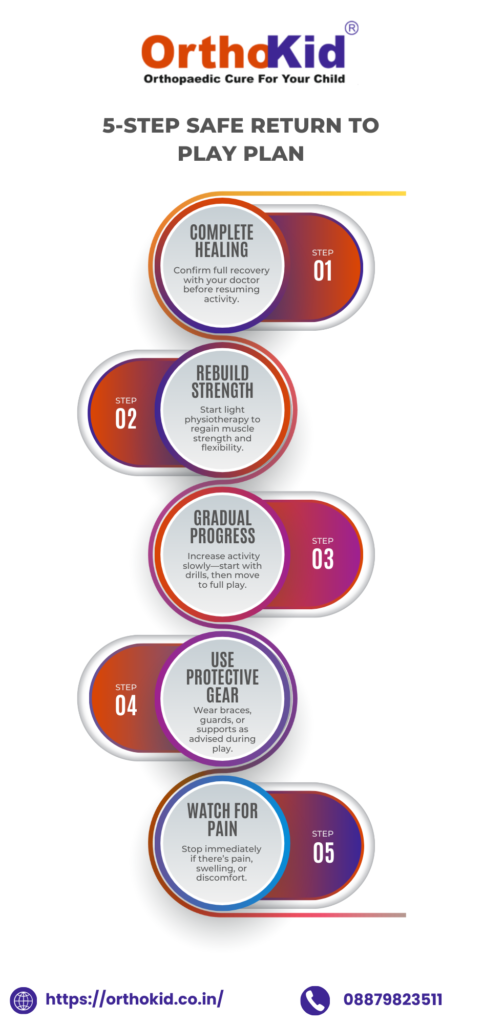
1. Complete Healing First
Never let a child resume physical activity before full recovery—even if the pain seems to be gone. Follow-up X-rays or physical assessments help confirm healing.
What to ask your doctor:
- “Is the bone fully healed?”
- “Is there a risk of re-injury?”
2. Rebuild Strength & Flexibility
After weeks of rest or a cast, muscles become weak and stiff. Start with light physiotherapy or home exercises to restore flexibility and balance.
3. Gradual Return to Activity
Use the 10% rule—increase activity by 10% each week. Start with simple movements, then non-contact drills, and finally full sports participation.
Example:
Week 1 – light jogging
Week 2 – basic stretches + drills
Week 3 – non-contact practice
Week 4 – full game
4. Use Protective Gear
Ensure the child wears the right protective equipment (braces, helmets, guards) if advised, especially after major injuries like fractures or ligament tears.
5. Listen to the Body
Teach your child to speak up if they feel pain, swelling, or stiffness during or after play. These are signs to stop and rest.
Don’t ignore signs like:
- Limping
- Favoring one side
- Complaining of soreness
Tips for Parents
- Keep communication open – Ask how your child feels after each practice.
- Support, don’t rush – Avoid pressuring them to perform or compete.
- Stay in touch with the orthopedic specialist – especially if your child is involved in competitive sports.
When to See the Doctor Again
If your child:
- Still limps or avoids weight on the limb
- Has new pain during movement
- Feels unstable while running or jumping
Book a follow-up evaluation to ensure it’s not a recurring or secondary injury.
Final Thoughts from Dr. Rajesh
At OrthoKid, we believe play is essential—but only when it’s safe. A step-by-step recovery and return plan helps your child heal stronger and build confidence—not just physically, but emotionally too.
So let’s keep our kids safe, strong, and smiling—on and off the field!