Why this topic matters in 2026
Parents today notice walking changes earlier—through daycare feedback, videos, and sports activity. The key is to separate normal developmental variations from gait abnormalities that may benefit from early assessment.
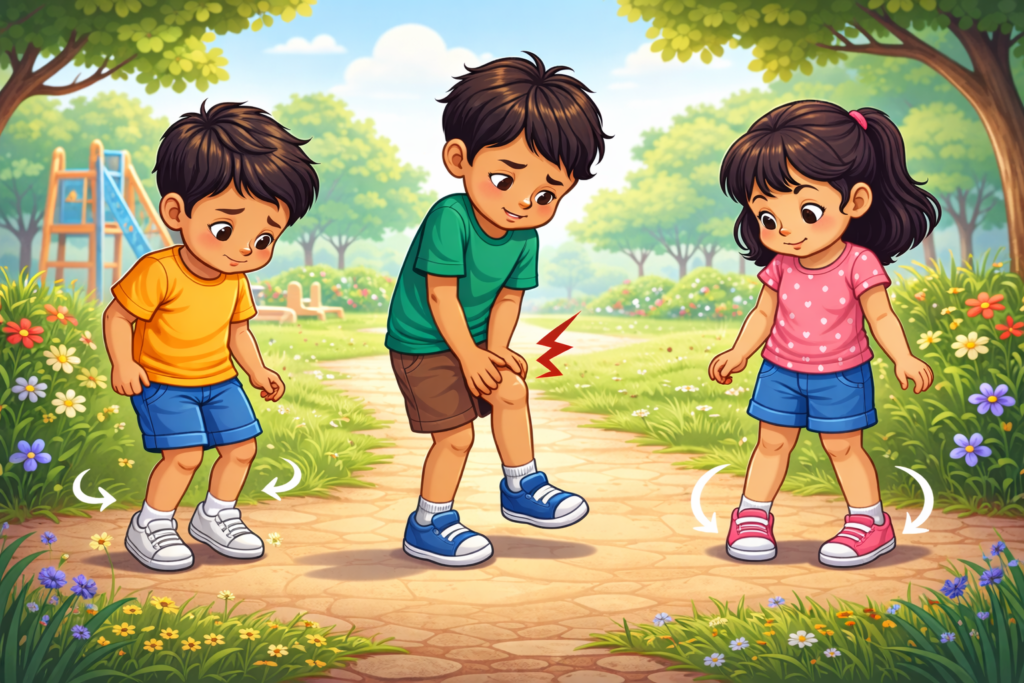
Many children show walking patterns like toe walking, limping, or in-toeing (pigeon-toe). Parents often wonder: “Is this normal?”, “Will it correct itself?”, or “Do we need treatment?”
Delaying assessment in certain situations can mean prolonged discomfort, avoidable strain, or missed early clues. At the same time, treating normal variations too aggressively can create unnecessary anxiety.
This guide explains common causes, “red flag” signs, and what evaluation typically includes—so parents can make calm, informed decisions about their child’s gait.
Gait = the way a child walks. Gait changes as bones, muscles, balance, and coordination develop. Some patterns are age-related and improve naturally, while others may need targeted care.
Understanding gait problems in children
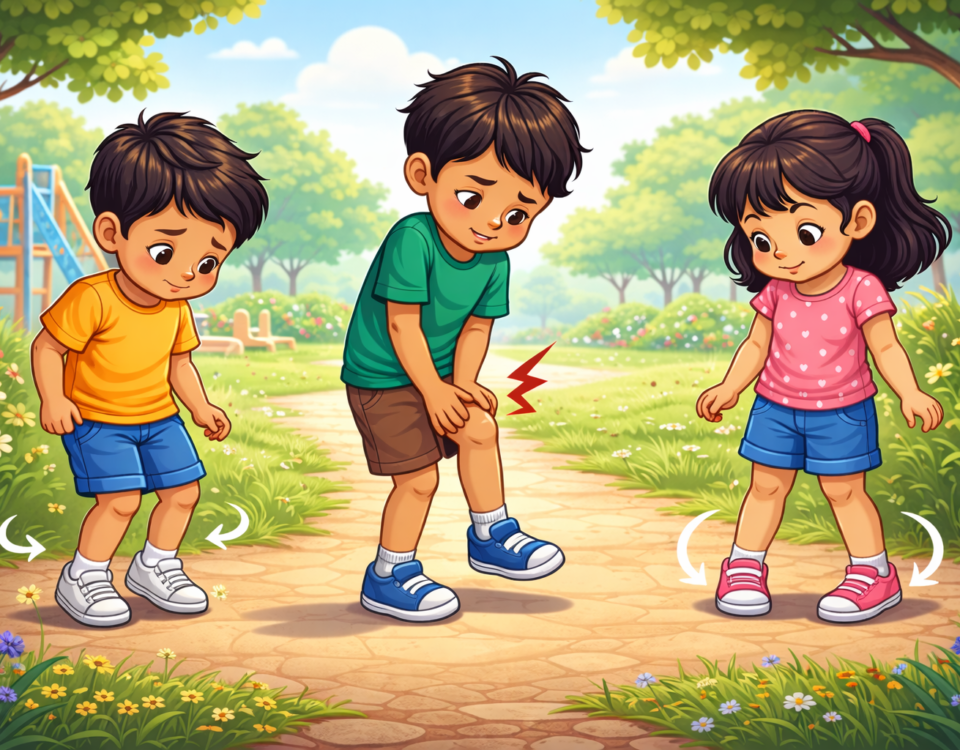
“Gait problems” can include: toe walking, limping, in-toeing, out-toeing, frequent tripping, uneven steps, or a walking style that changes suddenly.
Common (often normal) developmental patterns
- Mild in-toeing in toddlers
- Occasional toe walking in early walkers
- Clumsy phase during growth spurts
Patterns that may need evaluation
- Persistent limping or refusal to bear weight
- Asymmetry (one side different)
- Pain, stiffness, swelling, or night pain
Toe walking in children
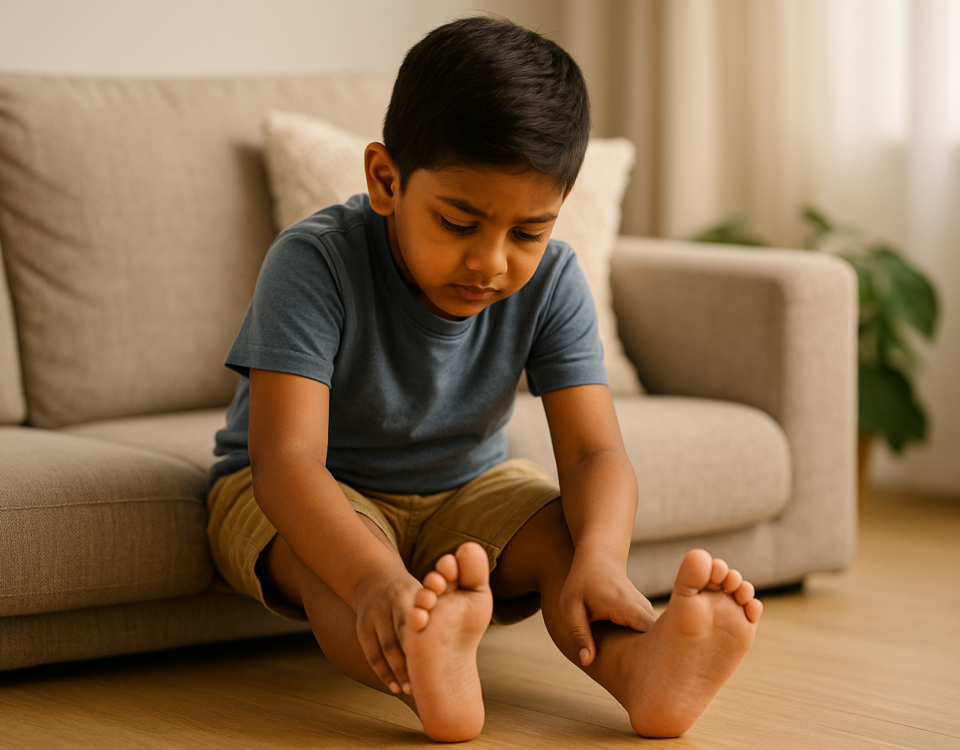
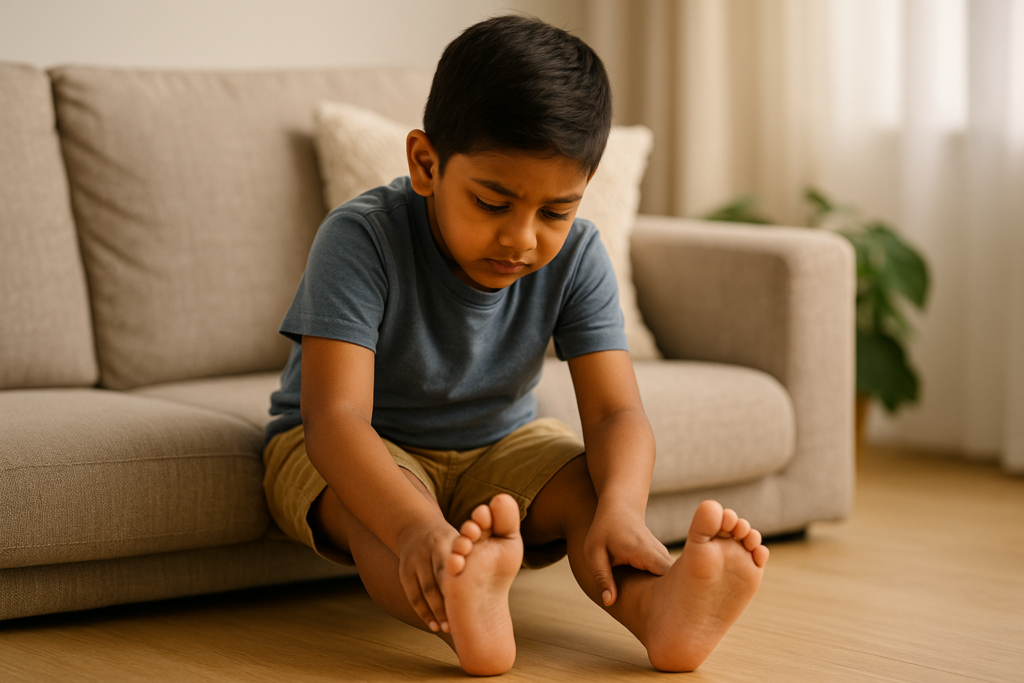
Toe walking means walking mainly on the forefoot (ball of the foot), with limited or no heel contact. In many toddlers this can be habitual and improves as walking matures.
Common causes
- Habitual toe walking (often seen in early walkers)
- Tight calf muscles or reduced ankle flexibility
- Sensory preferences (some children prefer forefoot contact)
- Less commonly, neuromuscular causes (requires assessment if suspected)
- Toe walking continues beyond around 3 years
- Child cannot place the heel down even when asked
- Stiffness, pain, frequent falls, or poor balance
- Regression in milestones or other concerns
Management may include observation, stretching guidance, physiotherapy, or other options depending on the cause and findings. A plan is usually individualized to the child’s age, flexibility, and function.
Limping in children
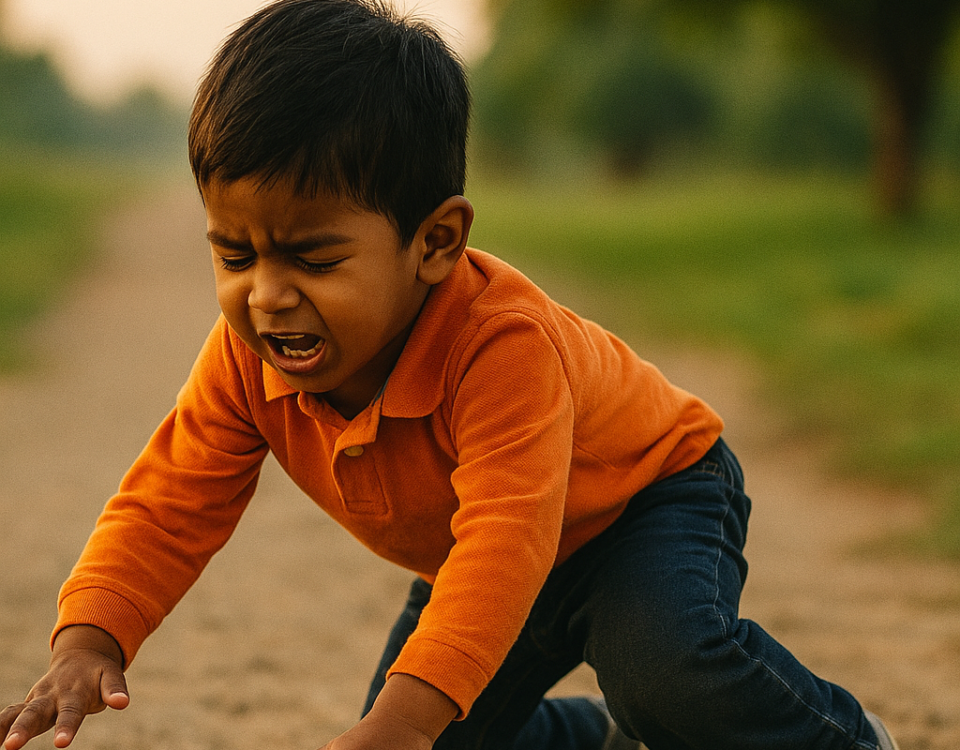
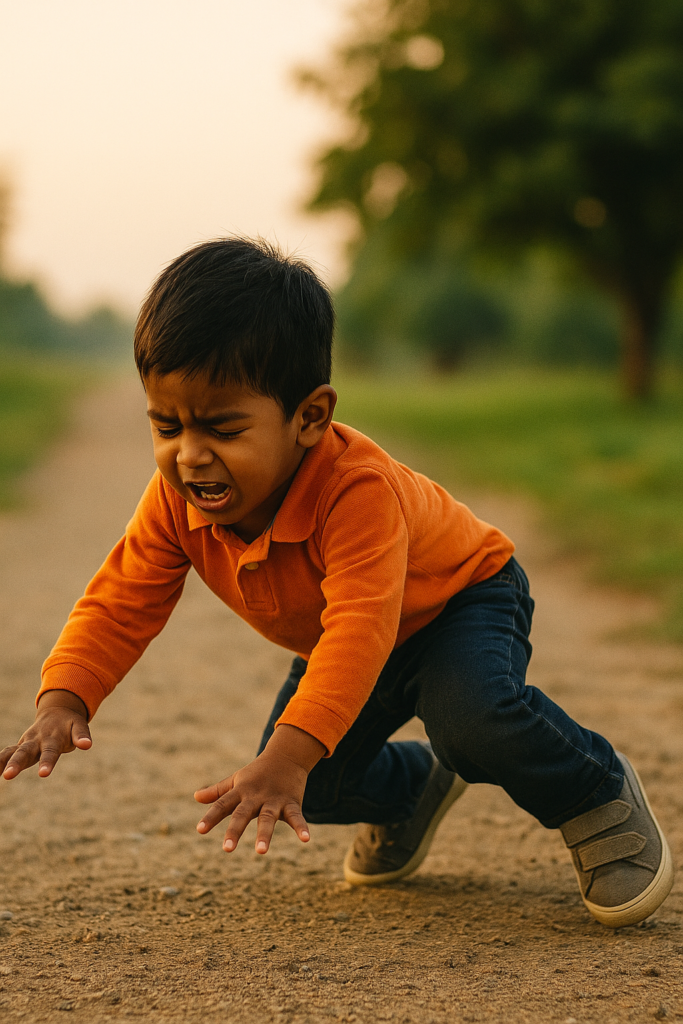
A limp is an abnormal walking pattern—often because of pain, weakness, or reduced movement in a joint. Limping can appear after play, a minor fall, infection/inflammation, or sometimes without an obvious event.
Common causes parents notice
- Minor injury, bruise, or sprain after sports/play
- Muscle strain
- Temporary inflammation around the hip/knee/ankle
- Foot pain (shoe issues, minor twist)
- Limp lasts more than 48–72 hours (or keeps returning)
- Child avoids weight-bearing / cannot walk normally
- Swelling, warmth, or visible deformity
- Fever, lethargy, or pain at rest/night
- Limp without any injury history
A pediatric orthopaedic assessment helps identify whether it’s a minor soft-tissue issue or something that benefits from focused care. Imaging is typically considered only if clinically necessary.
In-toeing (pigeon-toed walking) in children
In-toeing is when a child’s feet turn inward while walking or running. It is very common in toddlers and young children, and many cases improve naturally with growth.
Common causes
- Femoral anteversion: inward rotation from the thigh bone (often noticed in preschool years)
- Tibial torsion: inward twist from the shin bone (often noticed in toddlers)
- Foot shape variations: forefoot curve/position (noticed in infants/toddlers)
- Frequent tripping that affects daily activity
- Pain, fatigue, or avoidance of sports/play
- One side is significantly different (asymmetry)
- Parents notice worsening over time
Many children do not need braces or special shoes. The best next step is usually a clear diagnosis and a monitoring plan.
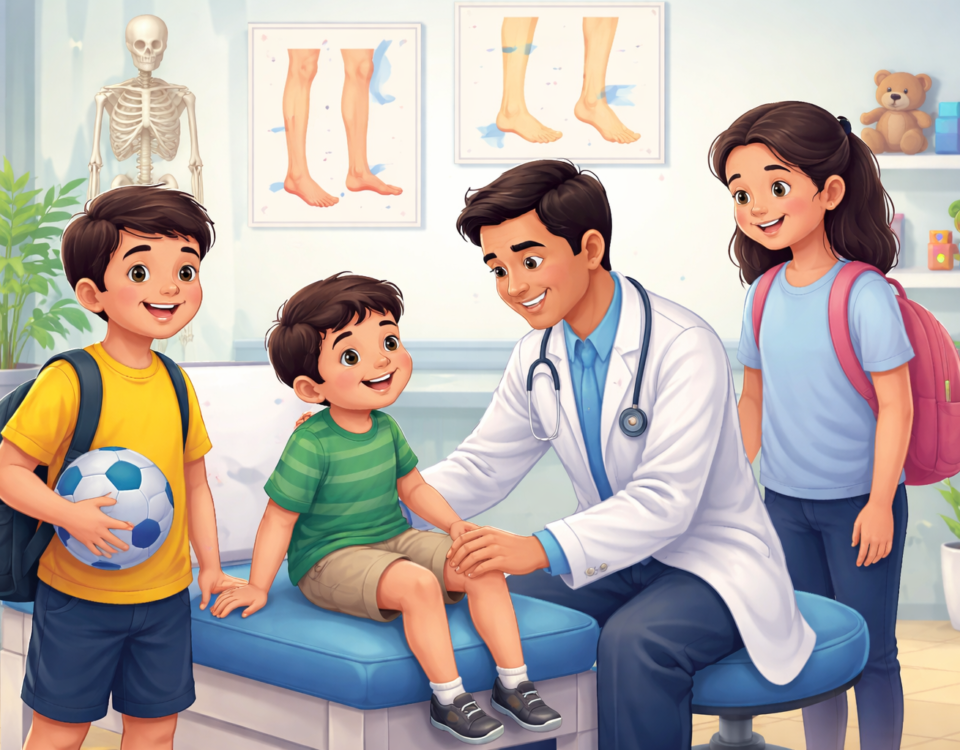
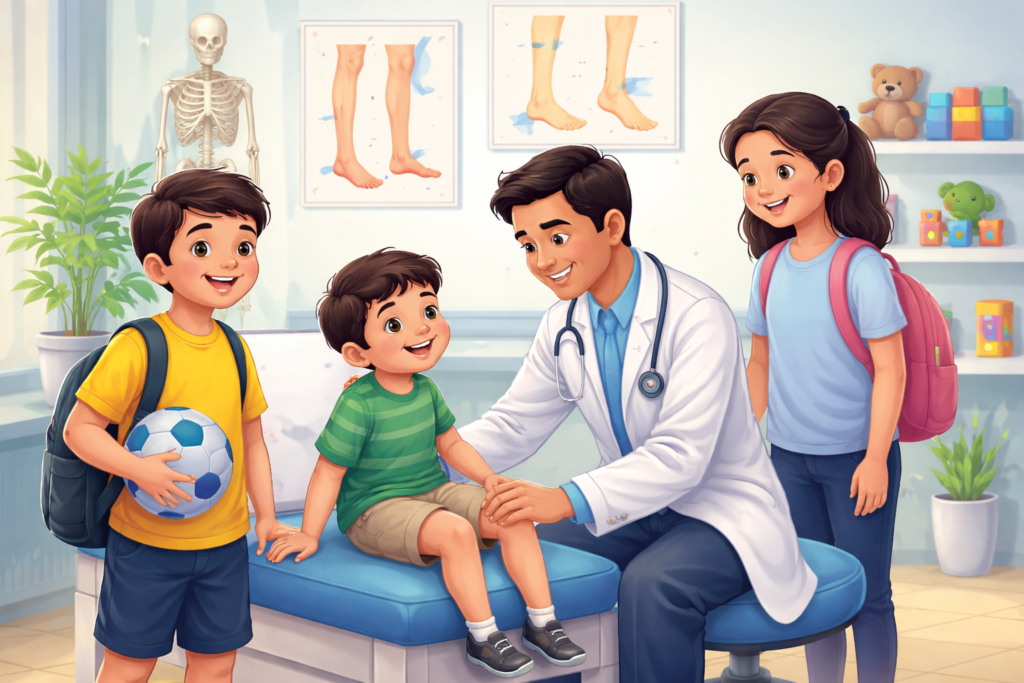
How gait problems are evaluated at a pediatric orthopaedic clinic
Evaluation usually includes:
- Developmental history (when walking started, milestones, pain pattern)
- Observation of walking/running, posture, and balance
- Joint motion checks (ankle flexibility, hip rotation, knee alignment)
- Muscle strength and foot alignment
- Imaging only when clinically indicated
To confirm whether the gait pattern is a normal developmental variation, identify any treatable factors (tightness, pain source), and guide parents on monitoring vs targeted intervention.
When parents should be concerned
Consider a pediatric orthopaedic consultation if you notice:
- Persistent toe walking beyond early toddler years
- Ongoing limping, refusal to bear weight, or recurrent limp
- Gait changes after fever/illness or associated with swelling
- Asymmetry (one leg/foot looks or behaves differently)
- Frequent falls, pain, or reduced participation in play/sports
Need clarity on your child’s walking pattern?
If you’re unsure whether your child’s gait is normal for their age, an evaluation can help you understand the cause and next steps.
This blog is general education and doesn’t replace an in-person medical assessment.
Related topics on OrthoKid
Strong internal linking helps parents discover related conditions and helps Google understand site structure. Link these contextually from within the article or as “Related Reads”:
Note: If these exact URLs don’t exist yet on your site, keep the structure similar and update links to your actual pages.
FAQs: Toe walking, limping & in-toeing
Is toe walking always a sign of a serious problem?
Not always. Many toddlers toe walk at times. Persistent toe walking, inability to bring the heel down, or pain/stiffness may need evaluation.
Can in-toeing correct itself as my child grows?
In many cases, yes. A pediatric orthopaedic exam helps confirm the cause and guide monitoring, especially if there’s tripping or asymmetry.
Should I buy special shoes for gait problems?
Special shoes aren’t routinely required for many developmental gait variations. Use supportive footwear and seek guidance if pain or frequent falls occur.
How long is limping “okay” after play?
Mild limping after a minor twist may settle quickly, but ongoing limping beyond a couple of days, or limping with swelling/fever, should be checked.
Takeaway for parents
Gait changes are common in childhood and often part of normal development. The safest approach is to watch for persistent patterns, pain, asymmetry, or red flags. If you’re unsure, a pediatric orthopaedic evaluation can provide clarity and a practical plan.