Child Falls Frequently While Walking – Causes, Warning Signs & Treatment in Mumbai
Is your child falling frequently while walking or running? Understand when it’s normal, when to worry, and how early treatment with a paediatric orthopaedic specialist can help.
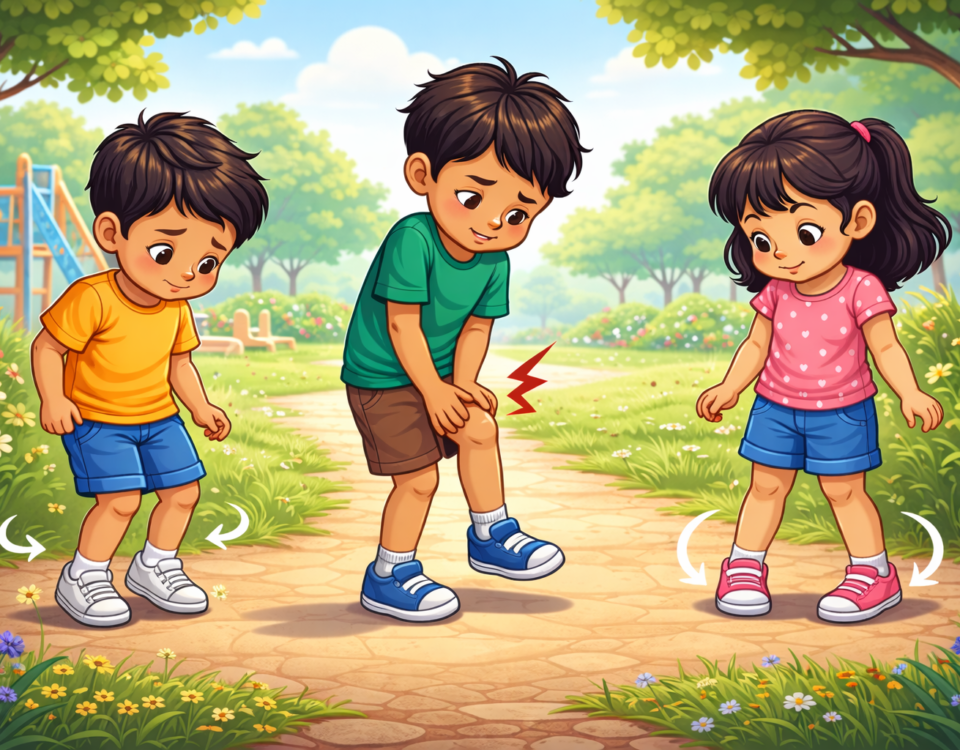
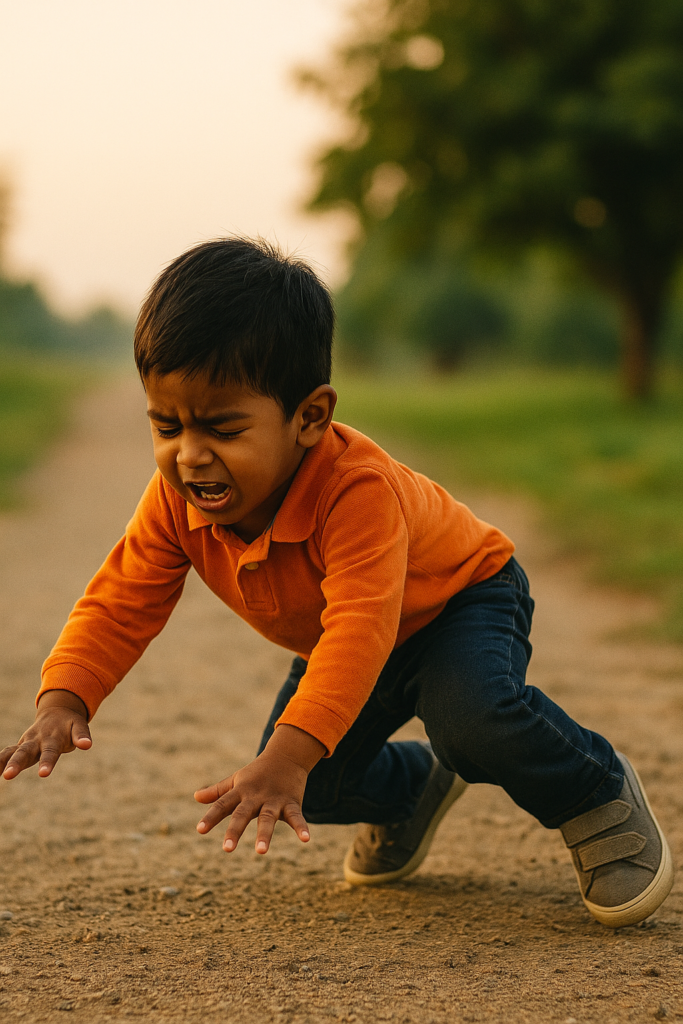
Every parent worries when their child falls frequently while walking or running. Occasional falls are normal as children learn balance, but repeated, daily, or worsening falls can indicate an underlying bone, muscle, or neurological issue.
At OrthoKid Clinics in Borivali East and Dahisar, we see many children who trip or fall more than expected. The good news is that most cases can be diagnosed early and treated effectively with timely intervention.
This article explains the common causes, red flags, home checks, diagnosis, and treatment options for children who fall frequently while walking.
Is Frequent Falling Normal in Children?
Children naturally fall when they are learning to walk, run, or climb. However, if your child:
- Falls more than 5–6 times a day,
- Trips even on flat surfaces,
- Cannot keep up with children of the same age,
- Gets injured often, or
- Shows a change in the way they walk,
👉 It is advisable to consult a Paediatric Orthopaedic Specialist for an evaluation.
Common Causes of Frequent Falling in Children
1. Flat Feet (Very Common in Growing Children)
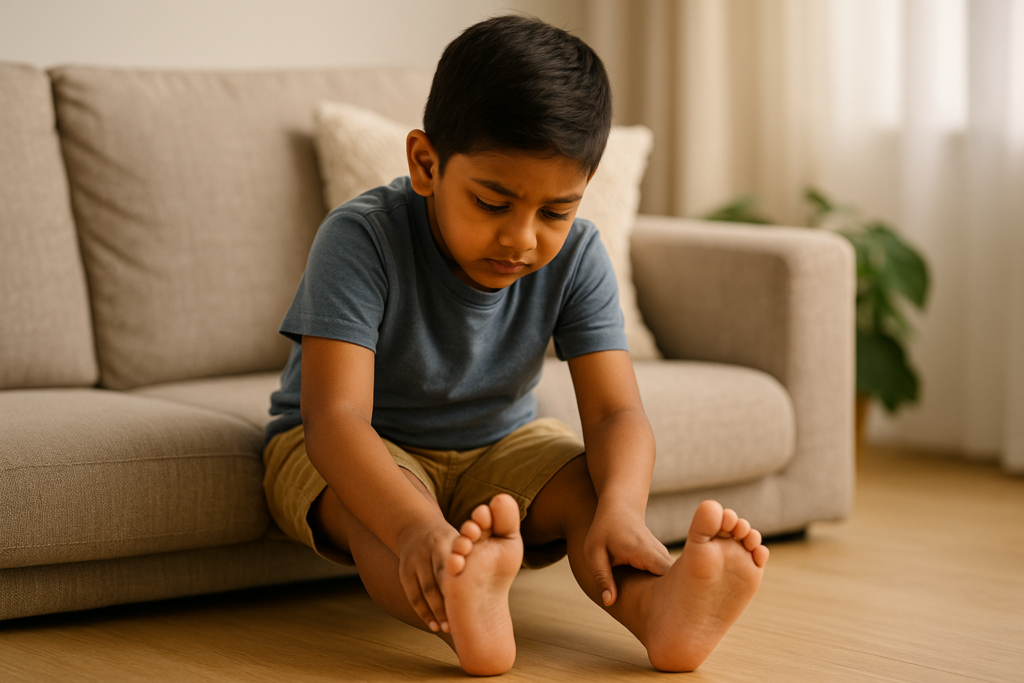
When the foot arch is low or collapsed, the child may walk with reduced balance and stability, which can lead to frequent tripping and fatigue.
Signs parents may notice:
- Shoes wearing out unevenly
- Child avoids walking long distances
- Complains of leg pain or tired legs
- Feet and ankles seem to “roll inward” while walking
Treatment: Foot-strengthening exercises, proper footwear, and in some cases, customized orthotic insoles after specialist assessment.
2. In-toeing (Walking With Feet Turned Inwards)
In-toeing is one of the most common reasons children trip and fall, especially while running. It may be due to:
- Femoral anteversion – twist at the hip bone
- Tibial torsion – twist in the leg bone
- Metatarsus adductus – inward curve of the foot
Visible signs:
- Child’s feet point inward while standing or walking
- Trips more while running or playing
- W-sitting habit (sitting with legs folded out on both sides)
3. Knock Knees or Bow Legs
Mild knock knees and bow legs are normal at certain ages, but if they are severe or persist beyond the expected age, they can affect balance and cause repeated falls.
- Knock Knees: Knees touch but feet remain apart.
- Bow Legs: Legs curve outward, leaving a gap between knees.
4. Weak Muscle Tone (Hypotonia)
Some children have low muscle strength or tone, which makes it harder for them to control posture and movement.
Common signs:
- Falls more often than peers
- Tires easily while walking or climbing stairs
- Walks slower than other children
- Prefers sitting or being carried
5. Vision-Related Balance Problems
Children who cannot see clearly may misjudge steps, edges, or distances and fall more often.
Signs to look for:
- Squinting or rubbing eyes frequently
- Holding books or screens too close
- Taking wrong steps on stairs
6. Neurological or Developmental Conditions
Less commonly, frequent falling may be linked to conditions such as:
- Mild cerebral palsy
- Global developmental delay
- Sensory processing disorders
Early evaluation by a paediatric orthopaedic and, if needed, a paediatric neurologist can significantly improve outcome.
7. Heel Pain (Sever’s Disease)
Sever’s disease is a common cause of heel pain in children aged 8–14 years and may make them limp, walk awkwardly, or fall more.
Symptoms include:
- Pain in the back of the heel after sports or running
- Limping towards the end of the day
- Refusing to participate in physical activities
Red Flags Parents Should Never Ignore
Seek an urgent evaluation if your child:
- Falls even while standing still
- Falls suddenly without any obvious reason
- Has leg pain at night or wakes up crying due to pain
- Started walking much later than expected
- Walks only on toes or avoids putting heels down
- Has one leg turning inward or outward more than the other
- Complains of numbness or weakness in legs
- Develops a visible deformity in legs or feet
Simple Home Checks Parents Can Do
These quick checks at home can help you observe your child’s walking pattern more clearly.
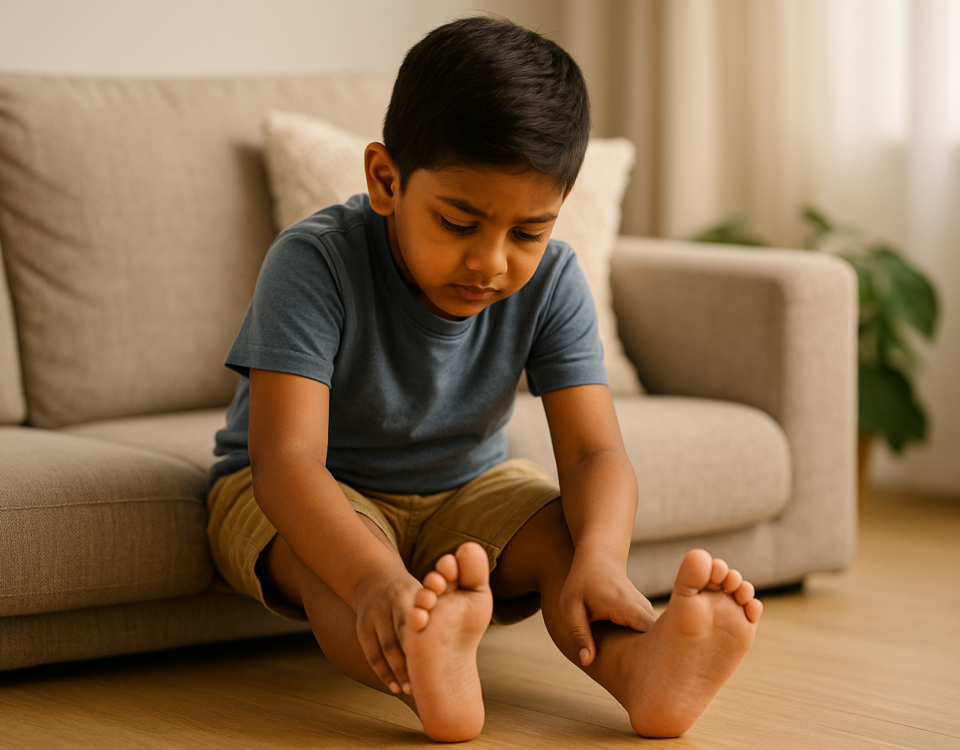
1. Wet Foot Test (To Check for Flat Feet)
Make your child wet their feet and stand on a smooth floor or paper. Look at the footprint:
- No visible arch on the inner side of the foot may indicate flat feet.
2. Foot and Leg Alignment Check
Observe your child from behind while they stand and walk:
- Do ankles roll inwards?
- Do knees tilt inward or outward?
- Does one leg appear different from the other?
3. Gait Video
Record a short slow-motion video of your child walking and running on a flat surface. Notice:
- Feet turning in or out
- Limping or dragging a leg
- Uneven or sudden jerky steps
Tip: Bringing this video to the clinic helps your doctor understand the walking pattern better.
How We Diagnose Frequent Falling at OrthoKid Clinic
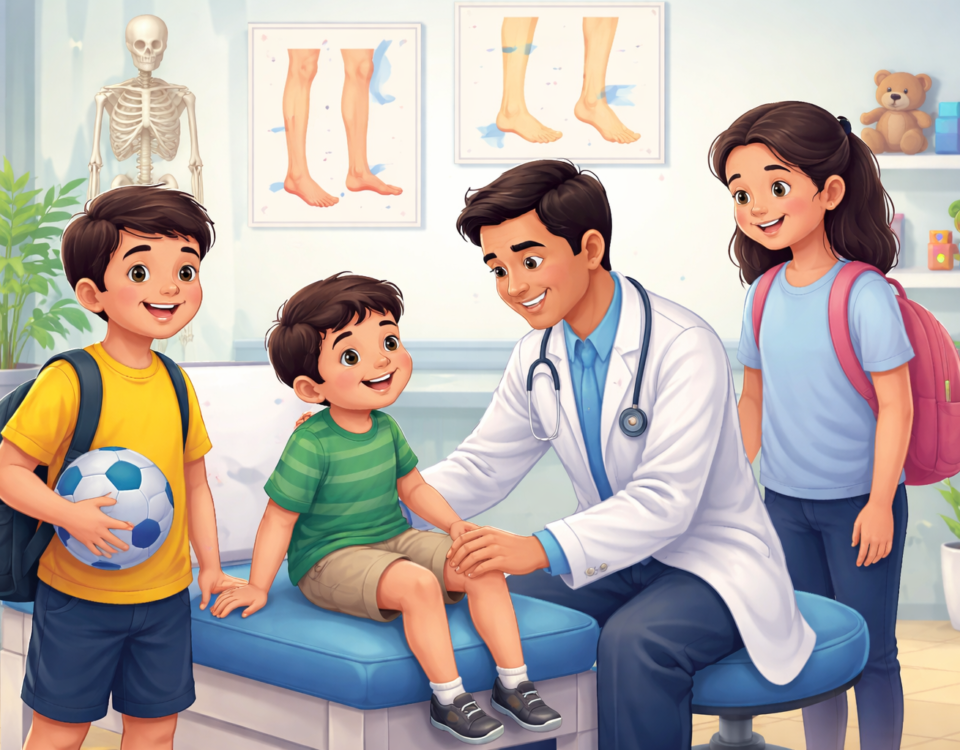
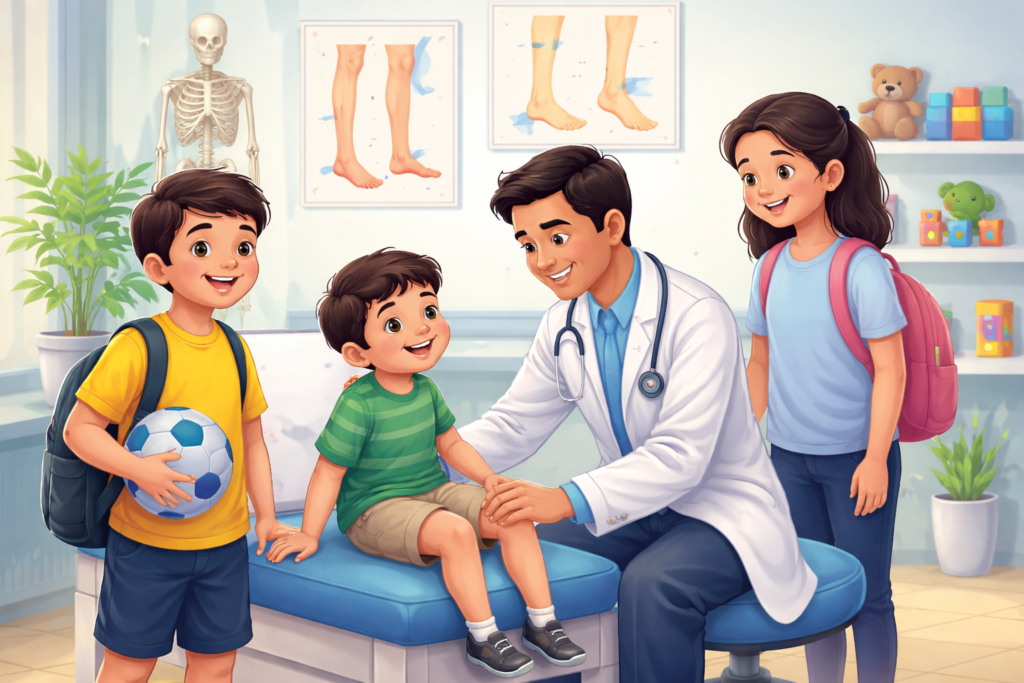
At Dr. Rajesh Panchal’s OrthoKid Clinics, your child will undergo a detailed assessment, which may include:
- Gait analysis (watching how your child walks and runs)
- Foot arch and alignment examination
- Hip and knee rotation tests
- Neurological examination where needed
- X-ray or other imaging only if clinically indicated
- Special tests for flat feet, posture, and leg length differences where required
Treatment Options for Children Who Fall Frequently
Treatment depends on the underlying cause and age of the child. Many problems can be managed with simple, non-surgical methods.
- Foot-strengthening exercises – to improve arches and overall stability
- Corrective footwear or orthotic insoles – customised support where needed
- Physiotherapy – to strengthen muscles and improve balance and coordination
- Vitamin D & calcium optimisation – for healthy bone growth
- Correction of deformities – if knock knees, bow legs, or other structural issues are significant
- Sports injury rehabilitation – for children active in games and athletics
- Multidisciplinary care – involving paediatric neurology or rehab specialists when required
Most children show noticeable improvement within weeks to months when the correct diagnosis is made early and treatment is started on time.
Why Choose OrthoKid & Dr. Rajesh Panchal in Mumbai?
Dr. Rajesh Panchal is a dedicated Paediatric Orthopaedic Surgeon with extensive experience in:
- Walking and gait abnormalities in children
- Flat feet, in-toeing, knock knees, and bow legs
- Childhood fractures and sports injuries
- Clubfoot and other congenital bone conditions
At OrthoKid, parents trust us for:
- Child-friendly approach and clear explanations
- Evidence-based treatment tailored to each child
- Focus on early, conservative management whenever possible
- Convenient locations in Borivali East and Dahisar
OrthoKid Clinics in Mumbai
Borivali East – OrthoKid Paediatric Orthopaedic Clinic
📍 Address: shop No 8, New Jalaram Bhuvan chsl, Carter Road No. 3, opp. Casa Pallazo, amba Mata chowk, Borivali East, Mumbai, Maharashtra 400066
📞 Contact: +91-088798 23511
Dahisar – OrthoKid Paediatric Orthopaedic Clinic
📍 Address: Ramkunwar Thakur Marg, Misquita Nagar, Krishna Colony, Dahisar East, Mumbai, Maharashtra 400068
📞 Contact: +91-088798 23511
Parents from Borivali, Dahisar, Kandivali, Mira Road and nearby areas visit OrthoKid for specialised child bone and joint care.
When Should You Bring Your Child for a Check-Up?
You should consider visiting OrthoKid if:
- Your child falls more than 2–3 times a day without clear reason
- You feel their walking pattern is different from other children
- They complain of frequent leg, knee, or heel pain
- There is a visible deformity in legs or feet
Frequently Asked Questions
-
Is it normal for toddlers to fall while learning to walk? ▶Yes, occasional falls are completely normal in toddlers learning to walk. However, if the child continues to fall very frequently beyond the learning phase or falls in an unusual way, a specialist check-up is recommended.
-
Can flat feet cause frequent falls in children? ▶Yes. Flat feet can reduce balance and shock absorption, making children more likely to trip, tire quickly, or complain of leg pain, especially after activity. Proper screening and exercises can help.
-
Will my child outgrow in-toeing or knock knees? ▶Some degree of in-toeing and knock knees is normal at specific ages. However, if it is severe, persists beyond the expected age, or causes frequent falls, it should be evaluated by a paediatric orthopaedic specialist.
-
Do all children who fall frequently need X-rays? ▶No. X-rays or other imaging are advised only if clinically necessary. Many conditions can be diagnosed with a detailed physical and gait examination.
Book an Appointment with OrthoKid
If your child is falling frequently or you are worried about their walking pattern, you can book a consultation with Dr. Rajesh Panchal at OrthoKid.
- 📞 Call / WhatsApp: +91-088798 23511
- 🌐 Website: orthokid.co.in
- 📍 Locations: Borivali East & Dahisar, Mumbai
Our goal is to help your child walk, run, and play freely – with strong, healthy bones and confident steps.