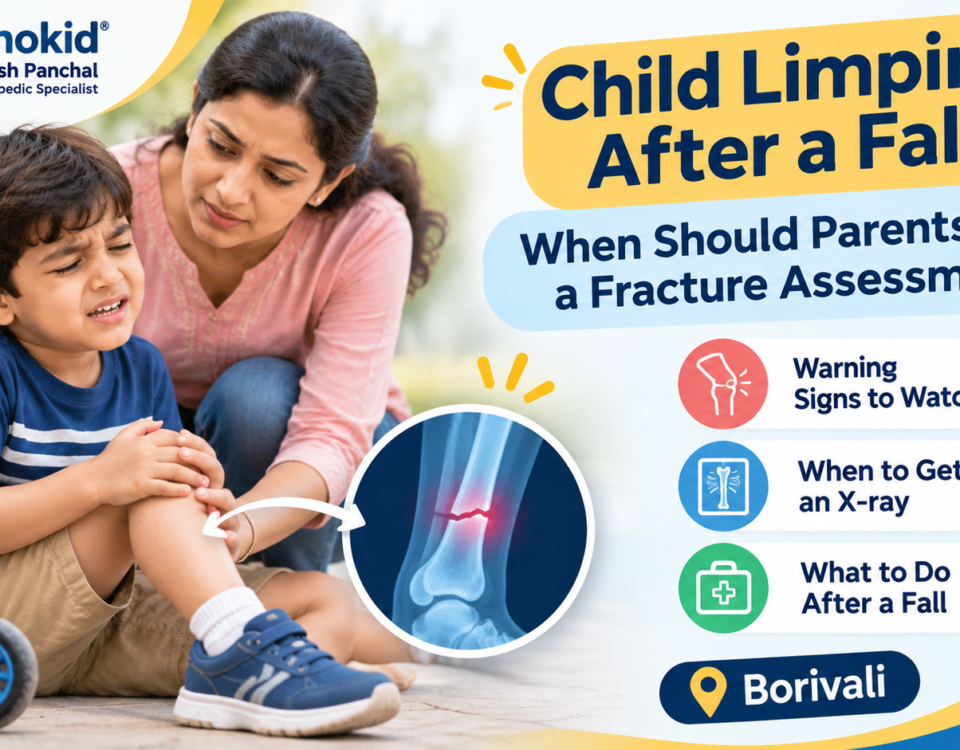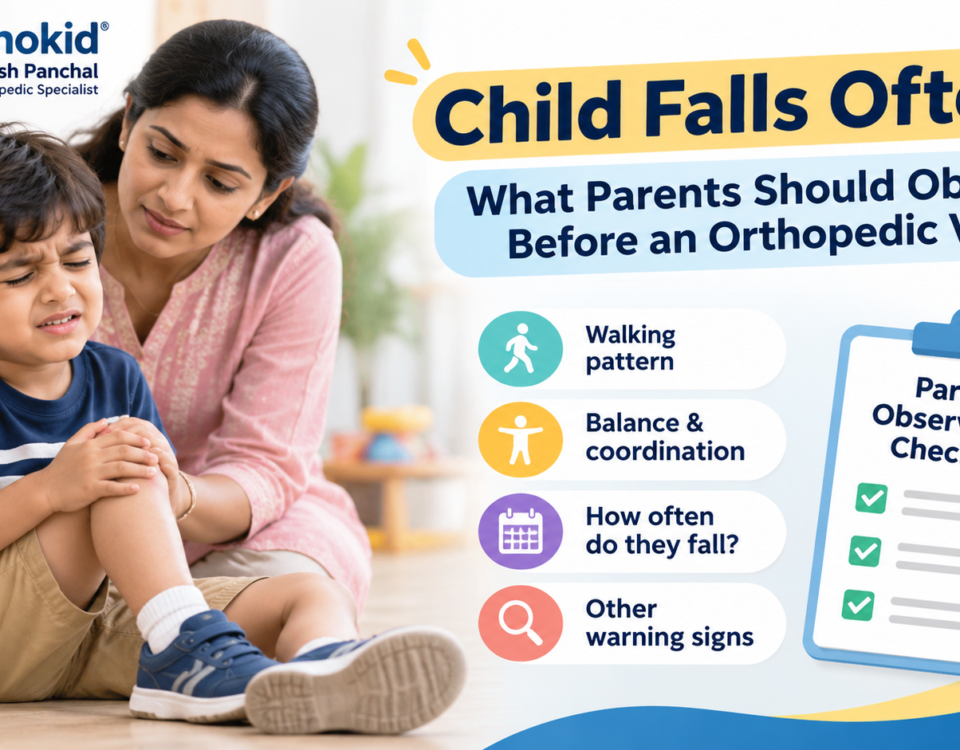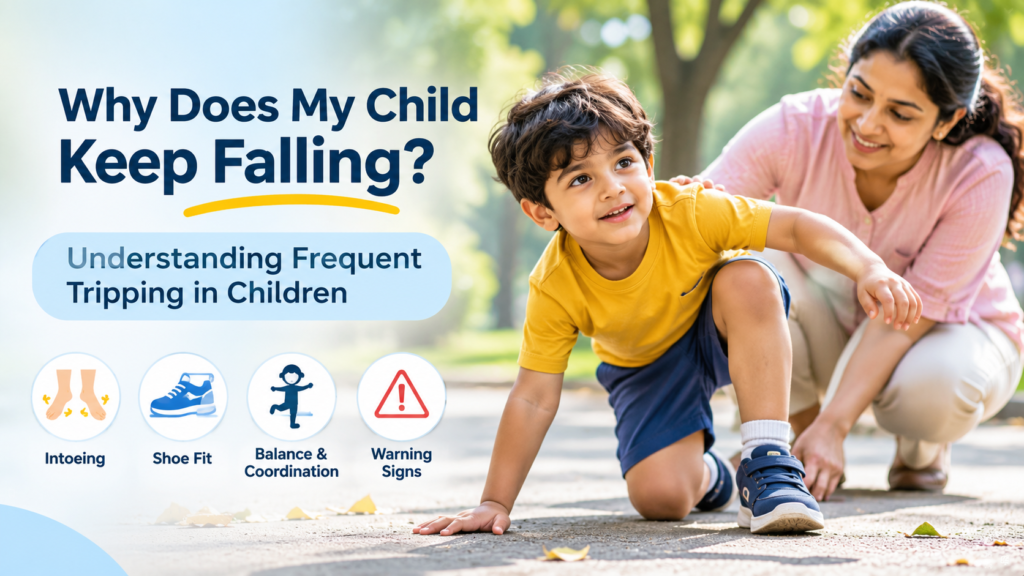
Why Does My Child Keep Falling? Understanding Frequent Tripping in Children
Your child runs across the park, trips, gets up and runs again. But what if it keeps happening? Understand common reasons for frequent falls, what you can check at home, and the signs that call for a pediatric orthopedic assessment.
Watch: Why Does My Child Keep Falling?
Dr. Rajesh Panchal explains common reasons children trip, the warning signs to watch for, and when to seek a pediatric orthopedic assessment.
My Child Keeps Tripping While Running. Is This Normal?
Seeing your child stumble repeatedly can naturally raise questions. Is it simply part of learning to run, or is there something about their walking pattern that deserves attention?
Occasional falls can be a normal part of childhood. Young children are refining their balance and coordination while learning to accelerate, turn and navigate changing surfaces. A single stumble usually says very little on its own.
Look at the overall pattern: Are falls becoming more frequent? Is your child limping, in pain, favouring one leg or losing an ability they previously had? Those details matter more than an isolated trip.
What Can Cause Frequent Tripping in Children?
There is no single explanation for every child who falls often. Two factors worth understanding are developing coordination and the direction the feet point while walking.
1. Developing balance and coordination
Running involves timing, strength and body control. Younger children are still practising these skills, particularly when turning quickly or playing on uneven ground.
2. Inward-pointing feet (intoeing)
Intoeing describes a walking pattern in which one or both feet point inward instead of straight ahead. In some children, this can contribute to tripping during walking or running.
Intoeing is relatively common in childhood, and many cases improve as children grow. Whether it needs assessment depends on the child’s age, walking pattern and associated symptoms—not the appearance of the feet alone.
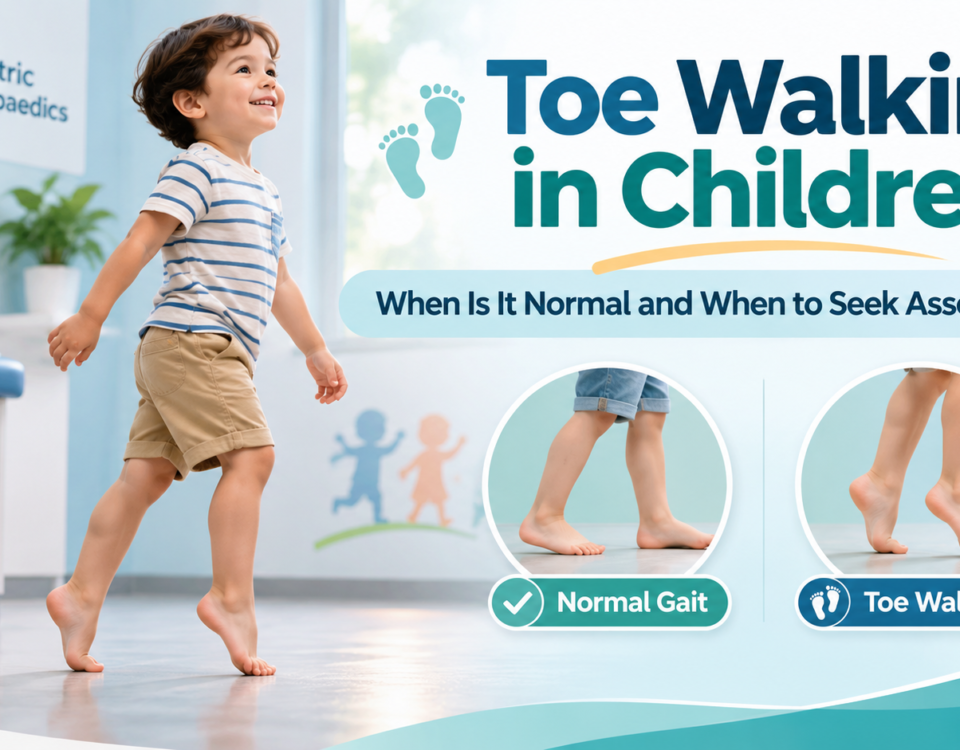
What Does Intoeing Look Like When a Child Walks?
Watch your child walk toward you at a comfortable pace. Do the toes generally face forward, or do they turn inward? The difference may be more noticeable when your child runs or becomes tired.
Feet pointing forward
Toes generally face the direction of travel. Natural variation in foot angle is normal.
Feet turning inward
One or both feet turn toward the body’s centre line. This is called intoeing and can sometimes be associated with trips.
Do not force your child’s feet into a different position. If the inward turning is pronounced, one-sided, worsening, painful or associated with frequent falls, seek an individual assessment.
Can Poorly Fitting Shoes Make My Child Trip?
Yes, shoes that are too loose or otherwise poorly fitted can interfere with comfortable walking and running. Shoe fit is an easy everyday factor to check before assuming there is a medical problem.
A quick shoe-fit checklist
- Make sure shoes are comfortable and not squeezing the toes.
- Check that the heel does not slide excessively.
- Ensure laces or straps are secure and not creating a tripping hazard.
- Notice whether your child trips in different footwear and during barefoot walking on a safe indoor surface.
Better-fitting shoes may help with avoidable stumbles, but they do not treat every cause of frequent falling.
Warning Signs Parents Shouldn’t Ignore
Persistent or worsening walking difficulties deserve attention, especially when your child has additional symptoms.
- Pain in the leg, foot, hip or knee during movement.
- Limping or a new, clearly unusual walking pattern.
- Increasing falls or trips that become more frequent over time.
- One-sided difficulty such as favouring one leg or noticeable differences between legs.
- Loss of previously acquired skills such as a child who was walking confidently but now struggles.
Seek urgent medical care if your child suddenly cannot stand or bear weight, has severe pain, or develops sudden weakness or loss of walking ability. Do not wait for a routine orthopedic appointment in these situations.
What Happens During a Pediatric Orthopedic Gait Assessment?
A pediatric orthopedic specialist may first ask when the falls started, whether they happen during running or ordinary walking, and whether pain, limping or changes in ability are present.
The examination can include watching your child walk, turn and move naturally while checking alignment, movement and differences between the two legs. The purpose is to understand the pattern and decide whether any further assessment is appropriate.
A short, clear video of your child walking toward and away from the camera can help illustrate what you have noticed. Note when trips happen and whether the pattern has changed. Video alone does not replace an examination.
What Should Parents Do if Their Child Falls Often?
Notice whether tripping occurs during fast play, on uneven ground or even during ordinary walking. Look for any worsening pattern.
Review shoe fit and watch whether the feet point inward. Avoid trying to correct a walking pattern by force.
Arrange professional evaluation for persistent or worsening falls, pain, limping, one-sided difficulty or a loss of walking skills.
Does Every Fall Mean My Child Has a Medical Problem?
No. Children may trip while developing balance and coordination. Some inward-pointing walking patterns also improve with growth. There is no reason to assume that every child who falls has a disorder.
At the same time, reassurance should not mean overlooking a persistent or worsening problem. A careful, individual assessment can help distinguish ordinary developmental variation from a concern that needs attention.
Concerned About Your Child’s Walking?
If your child keeps tripping and you are uncertain whether it is normal, a pediatric orthopedic consultation can help you understand their walking pattern and the right next step.
Book a Pediatric Orthopedic Consultation
Dr. Rajesh Panchal
Pediatric Orthopedics
Borivali, Mumbai
For general educational information only. This article does not diagnose a condition or replace medical advice specific to your child.
Frequently Asked Questions
Why does my 4- or 5-year-old keep tripping while running?
Developing balance and coordination, inward-pointing feet or poorly fitting shoes may contribute. Frequent or worsening falls, especially with other symptoms, warrant a professional assessment.
Is intoeing normal in young children?
Intoeing is common in childhood and many cases improve with growth. A clinician can assess it if the pattern is marked, painful, worsening, one-sided or associated with persistent difficulty.
Can shoes fix my child’s intoeing?
Comfortable footwear may help prevent trips related to poor fit, but ordinary shoes do not necessarily correct the underlying reason feet turn inward.
When are frequent falls a reason to see a doctor?
Seek an assessment if falls persist or worsen, or if your child experiences pain, limping, one-sided difficulty or loss of previously acquired walking skills.
What should I do if my child suddenly cannot walk?
Seek urgent medical care, particularly if there is sudden inability to bear weight, severe pain or sudden weakness.